thoughts on the Mariners, MLB draft, and more home • links • draft • about me

Pirates Steal Kang?

KBO branding! (Mori Chan, Flickr via Wikimedia Commons)
The Pittsburgh Pirates, for just a shade north of $5 million, won negotiating rights for Korean infielder Jung-ho Kang. This move has virtually no bearing on the Mariners and may prove to have little bearing on the Pirates or Major League Baseball in 2014. Truth is, nobody really knows what Kang might do in the major leagues, and that's the main point of this post.

Here is what's known about Kang. He has played in the Korea Baseball Organization (KBO, South Korea's equivalent of MLB) and walloped pitchers for years. This past season Kang posted an absurd .356/.459/.739 triple slash line with 40 home runs in 117 games. He also posted these monstrous numbers while playing shortstop. Shockingly, Kang was named MVP.

The KBO does not feature the same talent level as Major League Baseball, or Japan's professional leagues for that matter. However, after that, it's hard to find a much better league. Furthermore, South Korea has shown well in the World Baseball Classic, for what that is worth. The real challenge here for statisticians and scouts alike is that nobody has jumped from the KBO to the big leagues like Kang is poised to do. Unsurprisingly, scouting reports on him vary from potential impact bat in the middle of the diamond to mediocre reserve that lacks the tools to play shortstop or second base in the majors.

I am no more qualified than anyone else to pass judgement on Jung-ho Kang. In fact, I have not seen any video on him and I have no way of converting KBO stats into major league equivalencies. Google "Jung-ho Kang" and see if you can find more meaningful analysis of him as a player than I have already provided. Right now, I am more interested in the idea of Jung-ho Kang - and I am surprised the idea of Kang only cost a little more than $5 million to negotiate with. Other players shrouded in mystery - ideas, as I am calling them in this post - have fetched more money.

Let's start with the Mariners. They forked over $13 million in 2000 to talk to Ichiro, which in hindsight seems like a steal. It was. However, at the time, there had not been an impact bat that migrated to MLB from Japan, and Ichiro didn't necessarily have skills that would translate well. He lived off of of singles. He was a glorified slap-hitter. There was uncertainty over whether he could consistently make contact against MLB pitching and especially if he had the bat speed to pull big league fastballs. Still, the Mariners bet on the idea of Ichiro - that arguably the greatest hitter in Japanese history could also hit in the major leagues - and the bet worked out.

Fast forward to Yoenis Cespedes and the Athletics. Cespedes was not the first Cuban to ever play in the Majors, but it was still surprising when he signed a 4 year, $36 million contract, particularly with the thrifty A's. Oakland couldn't have had great data to work with because of the nature of Cuban baseball and Cuban-American relations*. The general consensus is that Cuban baseball is among the best in the world, but measures of their greatness are very hard to discern given how little access they have to Americans and vice-versa. It's simply hard to get enough measuring sticks to known talents. The Athletics had to be sold on the idea of Cespedes - that a freakishly gifted athlete known as one of the best talents in Cuba could also emerge as a great player in MLB without much development. He did, and paved the way for the burgeoning contracts heaped upon Cubans, most recently Yasmany Tomas.

*At least up until this past week!

Kang is the latest unknown. A risk-averse franchise could easily justify passing on him. There is no way to know exactly how his skills will translate, or if they will at all. He could be a product of small ballparks. He could lack bat speed. Perhaps the MLB game will be too fast for him to adequate defend up the middle. These are all reasonable assumptions. They might all be probable outcomes. Baseball is largely a game of failure. A league-average batter makes outs twice as often as they reach base. Well less than half of players drafted, even in the first 10 rounds, ever even make the majors.

The high failure rate is exactly why more teams should have gambled on Kang's potential. The question, in my mind, is not so much how well Kang will do, but how much is worth investing in such an unknown in baseball's current climate. Team's can't spend like they used to in the draft, and the continued cashflow from baseball's obscene new TV contracts is driving free agent contracts up at rapid rates. Moreover, the analytics revolution in baseball have made both the amateur draft and free agency more efficient markets - in other words, marketplaces where teams are more likely to get what they pay for than ever before.

Kang represents the possibility for a market inefficiency - a bargain, in other words. Yes, he comes with risks, but really, how much of a risk did the Pirates take? What else could they have done with $5 million? For perspective, the Mariners will pay Willie Bloomquist $3 million this season. Willie Bloomquist, he of no power at all and mediocre middle infield defense. Kang will cost more, but he comes with much more upside. What if he can hit 15 dingers with middling defense at second base? Even with something like a .260 batting average and .320 OBP? That's an everyday second baseman in today's MLB environment, and everyday players are worth around $10 million on the open market these days.

Pittsburgh has bet on the idea of Kang - that a slugging shortstop from Korea can be an MLB contributor. Recent history has been kind to franchises that took these types of risks. There is a price point where the risk on Kang does not make sense, but it is north of $5 million in my eyes. Perhaps it will take a huge contract to sign him and he won't be a steal, but I doubt that. Pittsburgh just took a risk that many other teams should have taken.

Ruggiano Acquired, Seth Smith Watch Begins

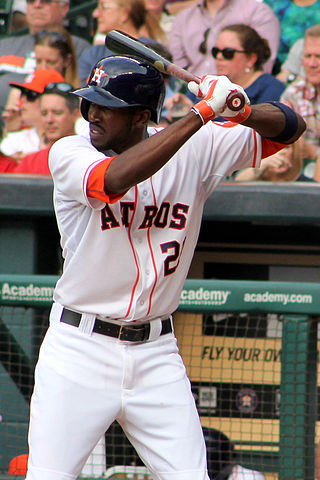
proof that Seth Smith plays the outfield
(Julio Enriquez, Flickr via Wikemedia Commons)
The Mariners made a small move today that they tried to play as a big one by sending out a bulk e-mail about it to fans. They acquired OF Justin Ruggiano from the Cubs for minor league pitcher Matt Brazis.

Let's start with Brazis. He is a 25-year-old righty bullpen arm that put up some great numbers split between High Desert and Jackson. However, he is already a bullpen arm, and a bit old for the leagues he was playing in. He could prove to be replacement level bullpen arm in the majors, but it's doubtful he turns into much more. The Mariners farm system remains in tact.

Then again, the Mariners didn't acquire an incredible talent either, though Ruggiano brings some needed skills. Ruggiano, now 32 years old, broke through a few seasons ago with a surprising second-half surge in Miami. He has never duplicated that magical half-season, but he continues to flash a surprising power-speed combo with limited contact and on-base skills. He combines that with an adequate outfield glove that's even capable of playing in center field. Basically, Ruggiano is a poor team's version of Michael Saunders - or, perhaps a mirror image of Saunders. Ruggiano bats right-handed, seemingly a requirement for the Mariners to pursue a batter these days.

Justin Ruggiano is not an everyday player for a contending team, though his skillset would be very nice to have on the bench. With that said, finding Ruggiano a platoon partner could work out nicely. His wRC+ for his career against lefties is 128, while against righties it is 94. If you aren't familiar with wRC+, a score of 100 is league average. Ruggiano doesn't have a massive split, and he's not a black hole against righties, but he's clearly better against lefties. Moreover, he's better enough, and in the right talent range, that the little edge is the difference between a bench player and a bona fide starter.

So, it would make good sense for the Mariners to find another corner outfielder with a complimentary split. Enter Seth Smith of the San Diego Padres, who I will admit I have been a longtime fan of. I love his swing and overall offensive game. It should play nicely in Safeco Field. Smith, for his career, has a 123 wRC+ against righties and a suicidal 63 wRC+ against lefties. That is a truly massive platoon split, and it's so crippling (given Smith's below-average defense) that it pretty much makes Smith a role player.

Smith, by the way, should be available in the very near future. The Padres have rumored deals complete for Matt Kemp and Wil Myers, both corner outfielders at this point. There would be no logical place for Smith to play, and given his non-prospect status without a role on the Padres, he should not cost the M's a top prospect.

If the Mariners acquired Smith and paired him intelligently with Ruggiano, they are looking at slightly below average defense with a 120 wRC+ in right field. For comparison, Saunders posted a 126 wRC+ last season with above average defense. Saunders is still the better option, but at least at the dish he would not be missed too badly in this scenario.

So let the Seth Smith watch begin, because at this point he's the guy that makes both the Saunders and Ruggiano trades make sense. I still despise the Saunders-Happ trade, but I would tip my cap to Zduriencik if he finds a way to string together a decent everyday right-fielder out of non-premium prospects.

No Melky, Probably a Problem, But We Shall See

Dexter Fowler (Wikimedia Commons, author EricEnfermero)
The White Sox signed Melky Cabrera to a 3-year, $42 million deal. Why the Mariners could not match or better this deal is beyond me. I had really warmed to the idea of Melky replacing Michael Saunders* because the Mariners are a team worth spending money on.

*For the record, I fully expect the Saunders-Happ deal to turn out badly. I do not like that deal at all. Happ is a rental that might turn out to be the M's sixth best starter. Now they have a hole in the outfield. Happ is also older, more expensive, and on a shorter contract than Saunders. Happ is a decent lefty. I don't expect him to bomb, but the trade is still remarkably bad.

The Mariners really need a right fielder and the free agent market looks pretty barren at this point. Jack Zduriencik will do something, and at this point I have resigned myself to the fact that either Taijuan Walker or James Paxton will be peddled for an "impact" bat. The only realistic impact target is Justin Upton, who is a free agent after 2015 and only unblocked the M's from his no-trade clause this past year. I like Upton, but do not like the idea of trading a premium prospect for him, all things considered.

There are some other options though! None of them are as good as Michael Saunders, but we no longer live in a world where Michael Saunders exists on the Mariners roster. With a little creativity the M's could find a nice right-fielder though. Some ideas:

  • Justin Upton - The Braves are significantly retooling, and behind closed doors I bet they would admit that they do not care how competitive they are in 2015. The Nationals are really good right now, but face some contract crunches after next season. So, I bet Atlanta really cares about being good in 2016. That makes Justin Upton rather expendable. The problem is that he probably costs either Walker or Paxton, unless Zduriencik gets creative. Personally, I wonder what would happen if the Mariners took on both Justin and B.J. Upton. Would absorbing those contracts only cost Erasmo Ramirez and a lower level prospect or two?
  • B.J. Upton - Mancrushes die hard, I suppose, because I still see a glimmer of hope in B.J. He remains an adequate defender in center field, which means he is a good candidate to be an above average defender in right. Furthermore, B.J. still sports one of the highest walk rates in baseball and he still steals bases at an above average rate. Upton is also only 30 years old, which is easy to forget with how long he has been around in the big leagues. I would not want to count on B.J. Upton to be an everyday player on a contending team, but I bet he could be had for very cheap and a change of scenery back to the American League might help him find a bit of his dynamic form from his Tampa years.
  • Dexter Fowler - Truth be told, this is the guy I would target if I were in Jack Z's shoes at this point. He is a free agent after the 2015 season, which should suppress his trade value some. I would dangle Erasmo Ramirez and I would think that the Astros would have to listen and think about that deal long and hard. Fowler is a remarkalby similar player to Melky Cabrera, believe it or not. Both are switch-hitters with similar production profiles. Fowler was worth 17.3 runs of offense according to Fangraphs, which compares quite favorably to Melky's 16.0 runs. Fowler's defense grades out worse - but only slightly worse than Cabrera while playing center field, which is a more demanding defensive position. Fowler should not be a center fielder anyway. He could be moved to right field and has a decent chance to be as productive as Melky Cabrera - and for only a shade under $6 million.
  • Allen Craig - Craig absolutely tanked last year, but was a solid 2+ WAR player for three seasons prior. However, many trends in his stats are troubling, in particular a long and precipitous fall in his power numbers. Craig would be a borderline reclamation project, which means he should not be depending on as a cog in a contending team's lineup. However, if the Mariners can't find anyone else, this would be one of their best gambles. He might be worth gambling on even if the M's find someone else for right field, particularly if they can get him for something like Stefen Romero and an organizational depth arm - a guy like Jordan Pries.
  • Colby Rasmus - The Mariners probably won't sign Rasmus, but they should consider it. Defensive ratings fluctuate wildly for him, but he remains very athletic and in his prime at 28 years old, plus he has played center field his whole career. He has a good chance to grade out as a good (or even great) right fielder. Rasmus also packs some thump in his bat, though it comes with an absurd amount of strikeouts. Rasmus is left-handed and sports a large platoon split, so that's enough to probably strike him from the M's thoughts. However, I would look at signing him and sitting him against lefties. Nelson Cruz can play right in those instances, and maybe that's enough outfield time to keep Cruz happy.
In general, my strategy and preference is to find a center fielder and convert him to right field. I think the Mariners could find some hidden value there - or, at the very least, I prefer to take a gamble on someone making that transition instead of someone who is already trying to hang on as a corner outfielder. With that said, my sinking fear is that the Mariners will acquire Dayan Viciedo from the White Sox and make him the next Carl Everett** or (gasp) maybe even the next Brad Wilkerson.

**Never forget the RALLY DINO!