thoughts on the Mariners, MLB draft, and more homelinksdraftabout me
Showing posts with label analysis. Show all posts

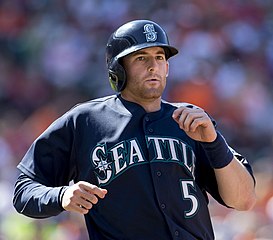
Ichiro, All-Time Hits King*(?)

Ichiro, in a pose that I hope one day is preserved as a statue somewhere in Safeco Field.

Ichiro is having himself a fine season with the Miami Marlins. He finds himself up to 2,979 career MLB hits and seems nearly certain to get 3,000 this season (likely sooner rather than later). More significantly, Ichiro just passed Pete Rose for the most hits ever by a professional baseball player if his hits in Japan are included with his MLB stats.

Understandably, there are divided opinions on whether Ichiro's Japanese league hits should count or not. Shockingly (note the sarcasm) Pete Rose doesn't think they should. His argument is essentially the age-old "slippery slope" one: the Japanese leagues are not the same caliber as MLB, so where does the line stop? Should Rose's minor league hits count then? What about Negro League stats?* If Japanese stats are included, our record books live in an entirely new world.

*Editorial note: those should totally count, and it would be a worthy challenge to try to translate those to Major League equivalencies.

Rose is obviously biased, especially given that the hit record is all he has thanks to his banishment from baseball for gambling. I am obviously biased too, given that I am a Mariners fan and watched Ichiro's prime up close. Still, even I can admit that Rose has a valid point. I think he is asking the wrong question though. The Japanese leagues are strong, but not as strong as Major League Baseball. That is not the real question at the heart of this debate between Ichiro and Pete Rose.

Who is the true hit king? And how do we figure that out?

I, for one, propose a different investigation. What if Ichiro had played his whole career in Major League Baseball? How different would his hit total be?

Obviously, we can never know for certain how different Ichiro's career would have been if he played his whole career in Major League Baseball. However, we have seven full seasons of data in Japan (plus a couple cups of coffee early on) and over a decade of data in MLB to look at. This is enough to make some educated guesses on.

So, I made some educated guesses. This whole next section is about my method. You can skip it if you want to avoid the details underneath the hood and go straight to the results (look for the next bold headline) if you prefer.

Translating Ichiro's Japanese hits into MLB equivalencies

Simply translating hits would be a pretty sloppy way to make the jump from Japan to MLB. Really at the heart of the transition is the quality of pitching and how Ichiro responded to it. There is at least a belief that MLB pitchers are quite a bit better than Japanese pitchers as a cohort. Better pitchers tend to strike out more batters, issue fewer walks, and/or induce weaker contact.

So, I chose to look at five stats: plate appearances (PA), walk percentage (BB%), strikeout percentage (K%), home run percentage (HR%) and batting average on balls in play (BABIP). Plate appearances log how many times Ichiro steps to the plate (walks and at-bats together). BB%, K%, HR% and BABIP all describe outcomes at the plate: either Ichiro walked, struck out, hit a home run, or put the ball in play somewhere. This is as true in MLB as it is in Japan. The real trick is figuring out how these factors changed when Ichiro faced MLB pitching. We would see evidence both of better pitching and any strategic adjustments Ichiro made within these numbers. Finding the conversions, and then using those conversions to adjust his Japan numbers, would give a good idea how Ichiro's seasons would have translated in MLB.

The other reason to use these underlying numbers is that they all stabilize relatively quickly. Fangraphs sample size suggestions say that BABIP of all these numbers is the most unstable, and the only one which would not stabilize within the confines of one season. The same could not be said for many other statistics. Eliminating noise in the data by picking stats that stabilize the quickest should help with accuracy.

Lastly, I decided to consider sample size anyway. I took all seven of Ichiro's full seasons in Japan but weighted them with his age 26 season worth 1, 25 worth 1/2, 24 worth 1/3, and so on until his age 20 season was worth 1/7. I went through the same process with his first 7 seasons in MLB, though with his age 27 season worth 1, age 28 worth 1/2, age 29 worth 1/3, and so on. Essentially, my assumption is that we really want to find the conversion between his age 26 and 27 seasons and use that to gauge as best we can how the rest of his Japanese seasons would have unfolded if they had happened against MLB pitching. Ichiro no doubt developed over his time (both in Japan and the United States), but he also had some up and down seasons. Including multiple years, but weighting them in the way I did, is an attempt to have neighboring seasons inform the investigation without obscuring that the most important and helpful data is closest to when Ichiro made the transition.

With the conversions for all five stats, it is easy to reverse engineer Ichiro's estimated hit total. I took Ichiro's plate appearances and multiplied them by 1.2 to account for the MLB season, which is approximately 20% longer than the Japanese regular season. I then took Ichiro's BB%, K%, HR%, and BABIP for each Japanese season and adjusted them according to the conversions I found based on his numbers in Japan versus his numbers in MLB. Then, with these four rate stats altered, I went back to his projected plate appearances and extrapolated how many walks, home runs, at-bats, and most importantly, hits he would get.

Results

First of all, the conversion rates I found with my method of investigating Ichiro's statistics confirmed that Japanese pitching is not as strong as MLB pitching, and that there is a noteworthy gap. I estimated that Ichiro's walk rate sunk about 37%, strikeout rate rose 18%, home run rate dipped 64%, and BABIP rate sunk 13% when he transitioned from Japan to MLB. In other words, pitchers walked Ichiro less while also striking him out more and inducing weaker contact (given that he hit way fewer home runs and less balls in play went for hits). These are strong indicators across the board that MLB pitching was a noteworthy step up for Ichiro.

Here are Ichiro's Japanese numbers, adjusted for MLB competition based on how he transitioned to MLB:

Age| Jpn PA Jpn AVG Jpn HR Jpn Hits | MLB PA MLB AVG MLB HR MLB Hits
18| 99.253024| 119.216025
19| 67.188112| 80.168013
20| 616.38513210| 739.3456242
21| 613.34225179| 736.32111220
22| 611.35616193| 733.3237223
23| 607.34517185| 728.3167215
24| 558.35813181| 670.3236206
25| 468.34321141| 562.3249171
26| 459.38712153| 551.3525179

The results are fairly interesting, and counterintuitive at first. Clearly, Ichiro's batting suffers against MLB pitching. His projected batting average dips 20-30 points every year and his projected home run totals plummet. However, his projected hit totals increase.

This counterintuitive result is largely driven by the longer MLB season, and more directly the assumption that Ichiro would be playing every day. However, the only reason that matters is because of how all the other factors combine.

Ichiro's shrinking walk and home run rates, while harmful to his overall value as a hitter, actually helped him more than offset his increased strikeout rate. Simply put, overall, Ichiro put more balls in play in MLB than he did in Japan because he walked so much less and hit so many fewer home runs that they more than offset his elevated strikeout rate. All three of these factors take balls out of play, and the main driver of how many hits a player gets is how many balls they put in play. Moreover, while Ichiro's BABIP shrunk some, it did not shrink a ton. The net result is a relatively similar hit rate extended over a longer season. In fact, I project Ichiro would have over 200 more hits if he had played in the majors - 1,494 projected hits to his actual 1,278.

There is one last big catch though that's pretty impossible to answer: when would Ichiro have debuted in Major League Baseball? He almost certainly would not have played as an 18 or 19 year old, especially given his struggles. 20 years old is also very young for a player to debut, much less start a whole season, but Ichiro's age 20 season was arguably his best in Japan. 20 isn't so ridiculously young to think Ichiro couldn't have made the majors at that age, especially given that he is a Hall of Fame talent and that he performed at such a high level in Japan. However, there really is no way to know.

If Ichiro had debuted playing every day as a 21-year-old, I have him projected at 4,193 total hits if he played his whole career in MLB. That would be less than 100 hits short of Pete Rose. So, if Ichiro had debuted halfway through his age 20 season and performed as well as he did, then he would theoretically have the all-time hit record. It's certainly plausible that Ichiro could have done this. Is it probable that he would have though? Hard to say, maybe even impossible.

Of course, this all assumes that Ichiro doesn't get another hit in MLB, and he isn't done yet. He is likely to collect several more hits between now and the end of his career. The more he gets, the later he would have to debut to be the all-time hit king with my projection method.

So, is Ichiro the new all-time hits king? It's hard to say. If he isn't, he is darn close. He is most certainly in a realm only Ty Cobb and Pete Rose have entered before him. That's ultimately the whole point in my eyes.

Ichiro's hit total tells a story; it says something about who he is and what a marvel he is when he steps into the batter's box. History suggests that there will be another hitter something like Ichiro at some point, but hitters like him are exceedingly rare, not even once in a generation. There is no guarantee we see another hitter like Ichiro in our lifetimes. That's what his Japanese numbers help us see and appreciate. That's the real story here. Long live Ichiro.

Chapman Traded, Bigger Concerns Glossed Over

Aroldis Chapman (Keith Allison, Owing Mills: Wikimedia Commons)
I generally avoid analysis of trades not involving the Mariners, especially given the plethora of deals Jerry Dipoto showered us all with. However, the Yankees pulled off an interesting trade with the Reds today. They acquired flame-throwing closer Aroldis Chapman from the Reds for four prospects.*


The trade interests me for two very different reasons, one about baseball, the other less so.

Major League Baseball has never seen a hurler like Aroldis Chapman before, and it might be a long time until someone like him is seen again. He throws absurdly hard and it shows up in his eye-popping strikeout numbers. It also shows up in other absurd ways, like the necessity to add a filter just for his velocities on MLB statcast. To say that Chapman throws hard is an understatement; he throws so much harder than everyone else that it almost seems like he is throwing a different ball or something. So, placing a value on Chapman is hard because there are no real comps for him.

Still, the Yankees at first glance are an obvious landing place for Chapman just based on their overall brand and prestige. Of course the hardest-throwing pitcher of all time would wear pinstripes! What else could he possibly wear?

Not so fast. The Yankees aren't the juggernaut they used to be. They have labored for modest winning seasons in recent years and face significant question marks in their starting rotation. The back end of their bullpen was already among the best in baseball before acquiring Chapman, thanks to the dynamic duo of Andrew Miller and Dellin Betances - the two relievers with the highest strikeout rates in baseball not named Aroldis Chapman. The Yankees make a strength stronger with this deal and leave question marks unanswered.

What a strength the Yankees have though. They just assembled the greatest bullpen baseball has ever seen. I try to avoid hyperbole, but in this case it seems like anything short of calling this 'pen the greatest would be hyperbole. Maybe the Yankees trade one of their premium relievers, but I hope they don't out of curiosity for how the trio would perform together.

The 2015 Yankees bullpen could be the ultimate realization of what Tony La Russa unleashed on the game when he got serious about specializing bullpen roles with the Athletics. Bullpens have become more and more specialized over the last quarter century and teams increasingly value those roles. Many quality arms are now funneled towards the back end of a bullpen, which would have been unthinkable a quarter century ago. Bullpens have steadily evolved in modern baseball and at some point some team was going to go out and build an elite bullpen despite holes elsewhere. The 2015 Yankees could be that team.

I remain skeptical that Chapman makes a big difference for the Yankees because I tend to be old-fashioned with my bullpen views. I think they tend to be overrated in today's game. Basically, my argument is an age-old one: just how much more valuable is one inning near the end of a game than the six or so from a starting pitcher? Especially when a team is adding a third elite reliever like Chapman? Essentially the Yankees purchased an upgrade for the seventh inning. Theoretically they are now set up to "shorten" games down to six innings with Chapman's acquisition.

Sabermetrics provide a tool for figuring out the value of later innings compared to earlier ones. It is called a Leverage Index, which is built upon Win Probabilities. A Win Probability is simply the odds of a team winning in the given game state at the moment. So, for instance, a team that just got the 27th out and has a lead would have a Win Probability of 100 (they just won, therefore they will win 100% of the time in that situation). The Leverage Index measures how much Win Probability fluctuates in a given situation, depending on the outcome of an at-bat. If you've ever heard the term "high leverage situation," it is referencing this statistic, and more importantly, referencing a particular moment where a game's outcome hangs in the balance.

The Hardball Times ran a study a few years ago to get a feel for average leverage by inning. Their results surprised me. The average leverage in each inning is shockingly stable, with one major exception: the bottom of the ninth inning. This data suggests that an elite closer is most valuable when trying to protect a lead on the road, but that all other situations are not all the different over the course of a season.

However, even though the overall average leverage in each inning is not all that different, the distributions vary a noteworthy amount. The same Hardball Times article explored how frequently each inning had a Leverage Index above 2 (which is a very high index; it basically suggests the game is likely won or lost on the next play) and found a steady climb in frequencies throughout the course of a game. First innings only peaked above 2 around 10% of the time, whereas the rate had climbed to 26% in the 8th inning, and goes all the way up to 51% in the bottom of the ninth.

The frequencies are a bit more abstract to understand but more insightful when it comes to bullpen use. The reality is that elite relievers do not pitch every day and a manager chooses when they are deployed. It is possible to hold them in reserve for higher leverage situations, and over the course of a season it is reasonable to expect a good reliever to face high leverage situations twice as frequently as a starter.

There is a bit of a chicken-or-the-egg quality to all this analysis though. Bullpens face lower leverage situations more often when starters shut down opponents over six or seven innings, and also when their own team's offense blasts off and builds a huge lead. This is why leverage is a poor tool for analyzing individual performance. It is easily swayed by things entirely out of an individual player's control.

The Yankees bullpen was already automatic in the 8th and 9th inning, so what is the value of an automatic 7th? It largely depends on what happens the first 6 innings, though the elite arms used to depend on what happened in the first 7. There is some value added there, but I am not convinced it is worth $10+ million for only 1 guaranteed year at the cost of a quartet of prospects - marginal prospects, to be fair, but still prospects.

Still, theoretically, a team that looks something like the current Yankees would seem likely to maximize the value of an elite bullpen. They have questionable starting pitching with an aging offense that is probably still okay but features a handful of sluggers in the decline phase of their careers. This is a team likely to have many decent starts and decent offensive outputs, which will hand many close games (the high leverage situations) to their bullpen if things go right.

There is also the ugly reason that the Yankees could acquire Chapman at what is considered a cheap price. He is going through an alarming domestic violence investigation.

There will be no formal charges against Chapman due to conflicting witness accounts, which is important to note. Still, avoiding legal charges because eyewitness accounts conflict is different from saying that nothing happened. Eyewitness accounts agree that Chapman fired a gun multiple times and his girlfriend, at some point, fell on the ground with some sort of assistance from him. It appears likely that a trade between the Dodgers and Reds fell apart once the domestic violence charges surfaced. The Yankees swooped in the ensuing vacuum and picked up Chapman at what is being characterized as a discount price because of the risk that MLB will suspend him.

The NFL gets (rightly) raked over the coals for their blind eye towards domestic violence. Frankly, the severity of the allegations surrounding Chapman approach the concerns in the high-profile cases of Ray Rice and Greg Hardy, but they are not as widespread because MLB is not a pop-culture behemoth steadily turning the North American viewing public into pigskin zombies on Sundays.**

**and Mondays and Thursdays and Saturdays in December, plus the weekends of the scouting combine and draft

MLB commissioner Rob Manfred is in a tough spot here, given the touchy nature of Chapman's situation. Chapman technically committed no crime, but this is a chance for Major League Baseball to take a stand on domestic violence that other leagues, notably the NFL, are yet to take. I do not envy the decision that weighs on his shoulders.

Regardless, the discussion around Aroldis Chapman the past 24 hours leaves much to be desired. There is plenty of chatter about how overwhelming he makes the Yankees bullpen, which is true and germane. Mentions of his alarming domestic incident are scattered and woefully shallow. His incident is typically brought up in the context of the threat of a suspension which would keep this hallowed Yankee bullpen from full force. There is no consideration for the woman he at least traumatized.

When did Aroldis Chapman's golden arm become more valuable than the well-being of another human? I wish this was the kind of problem that only existed in the NFL.

Maybe sports reports are not the place for commentary on domestic violence, but framing a domestic violence concern one-dimensionally as an on-field consequence comes across as crass and irresponsible to me. Locking down the end of a Yankees win in April or May is only so important. There might be a few things in life more important.

It was not that long ago that bullpens were holding tanks for all the pitchers not good enough to crack a team's starting rotation. Anyone in a bullpen was an afterthought a generation ago. That certainly is not the case anymore.

Dipoto Grabs More D, Acquires Sardinas

Jerry Dipoto, it turns out, is a man of his word. He said he wanted to make the Mariners more athletic and focus on run prevention. Both of his outfield acquisitions, Boog Powell and Leonys Martin, fit that mold. However, the Mariners were starved for outfielders. Dipoto's most recent trade really begins to show his value in defense.

Yesterday the Mariners made a minor move, shipping OF Ramon Flores to the Brewers for INF Luis Sardinas. I would argue this trade is the most interesting of Dipoto's so far because it gives us the best look at his vision. It's the first deal he made that did not address a gaping hole on the roster, so presumably this says something about how he values Sardinas and his skills.

Let's start with Flores though. We hardly got to know him. He was part of the package the Mariners got in return from the Yankees for Dustin Ackley at the trade deadline. Flores got off to a torrid start in Tacoma but broke his leg and missed the remainder of the season.*

*I was at the game where Flores broke his leg. It was weird. No contact involved. He crumpled to the ground in the middle of running down a ball in the right-center field gap.

I felt that Flores had a fringy toolset, but in areas where the Mariners lacked any skills. He batted leadoff in Tacoma and I quickly fell in love with his approach at the plate. Flores worked counts and was a safe bet to put the ball in play, often enough in the form of a pretty solid line drive. I liked him as a darkhorse to make the Mairners opening day roster, assuming he had recovered from his broken leg.

Luis Sardinas is an interesting return for a player like Flores. Sardinas is not much of a hitter (at least yet) but he can play shortstop and already has experience at second and third base. At worst he is a utilitiy infielder. However, Sardinas is only 22 years old and has a few cups of coffee in the majors to his credit already. He was also listed among the top 100 prospects in all of baseball in 2013 and 2014 by Baseball America. For a little perspective, neither Brad Miller nor Chris Taylor had gone beyond AA by the time they were 22 years old, and neither were ever listed as a top 100 prospect. This is hardly a guarantee that Sardinas will be an impact player in the majors, but he brings some interesting upside to the Mariners while also adding defensive depth around the infield.

I doubt anyone, Jerry Dipoto included, thinks that Luis Sadinas is a better hitter than Ramon Flores. So, Dipoto is banking on Sardinas providing value defensively, especially at shortstop. However, the Mariners already have Ketel Marte and Chris Taylor on the roster, so Sardinas is a bit buried on the depth chart. He is almost certainly more buried than Ramon Flores was.

Perhaps the Sardinas deal is actually a harbinger of yet another trade, ala when Dipoto acquired Joaquin Benoit and then shipped away Tom Wilhelmsen. However, this deal can also stand on its own. Sardinas is younger with better reports on his defense. He fits the Dipoto of team control and run prevention. He appears to show just how serious Dipoto is about both, given that Sardinas does not play a position of need like other Dipoto acquisitions have.

Ultimately, Sardinas reminds me some of Joaquian Arias, who is the definition of a replacement-level infielder. So, this trade is not likely to make a huge impact. However, from a skillset perspective, it says something about how devoted Jerry Dipoto is to defense and run prevention.

Robertson Claimed, Piles Grow

The Mariners made a small move yesterday, claiming OF Daniel Robertson off of waivers. He is the second waiver pick-up by Jerry Dipoto so far. The other is RHP Cody Martin, which happened so far underneath the radar that I did not notice until yesterday. The move actually happened October 19.

Neither Robertson nor Martin are exceptional on their own, but they both provide more clues on Dipoto's vision.

It is easy to see why Robertson was available on waivers. He is 30 years old and listed at 5'8". Unsurprisingly, Robertson has never hit for power, and really has not hit at all in the majors. However, Robertson is a capable defender at all three outfield positions and has a strong history of plate discipline throughout his time in the minor leagues. Jerry Dipoto has stated publicly that he wants athletic outfielders and prefers a style of baseball with lots of baserunners moving from station to station. Robertson is hardly an impact bat, but his limited skills are the ones that the Mariners did not have under Jack Zduriencik.

Cody Martin made his MLB debut last year and was about as unfortunate as unfortunate gets. He got lit up to the tune of a 7.92 ERA out of the bullpen. That was caused, predictably, by a high home run rate (21.1% of fly balls, over double the league average). Martin also suffered from a very low strand rate, meaning his baserunners came around to score well more than average. Martin has a track record of solid success starting in the minor leagues though, and Jerry Dipoto is clearly banking on both regression to the mean and Safeco's friendly confines masking the dinger issue. Plus, the Mariners needed some pitching depth. Martin is exactly the kind of pitcher that Dipoto should be going after to fill in roster depth.

Obviously, the offseason has barely begun and Jerry Dipoto likely has many more moves left before the Mariners report to Peoria next spring. However, even with the few moves on the books, it is clear that Dipoto is focused on finding strikeout pitchers with lots of team control (even if they have elevated home run rates), and speedy outfielders with on-base and defensive skills. So why not take a peek at what the Mariners opening day roster might look like right now? Here is my best guess:

STARTING LINEUP
  1. Boog Powell (CF)
  2. Ketel Marte (SS)
  3. Robinson Cano (2B)
  4. Nelson Cruz (DH)
  5. Kyle Seager (3B)
  6. Mark Trumbo (1B)
  7. Seth Smith (RF)
  8. Franklin Gutierrez (LF)
  9. Mike Zunino (C)
BENCH
  • Chris Taylor (INF)
  • Shawn O'Malley (UT)
  • Daniel Robertson (OF)
  • Jesus Sucre (C)
STARTING ROTATION
  1. Felix Hernandez
  2. Taijuan Walker
  3. Nate Karns
  4. James Paxton
  5. Roenis Elias
BULLPEN
  • Cody Martin
  • Tony Zych
  • C.J. Reifenhauser
  • Vidal Nuno
  • Tom Wilhelmsen
  • Charlie Furbush
  • Carson Smith
This is just my best guess, and actually I would guess that neither Dipoto nor Scott Servais has conducted this thought experiment with how crazy early it is in the offseason. I assumed all Mariners free agents were gone (hence no Iwakuma) and also assumed no free agent signings.

The 2016 Mariners will obviously look different, and in all likelihood better, than this current projected roster. That's not really the point of the exercise though. The point is that it is pretty easy to see the overall structure of the roster already. The outfield looks different, and the skillset Dipoto is focused on out there is likely to make the top and bottom of the lineup look very different. The pitching staff already looks like it will generate lots of swings and misses, but also more than fair share of fly balls. This makes a good defensive outfield all the more important.

I hope that Dipoto builds up some more depth, and there is little doubt he will do that. I like the overall feel of the Mariners team he is building. The little moves so far are building up some piles of serviceable players in spots where the Mariners had no replacement level players. It seems like the players being brought in are puzzle pieces that contribute to a better whole. This is progress.

Crazy Legs for Boog (and Others): Offseason Begins Unexpectedly

Brad Miller
(Flickr via Wikimedia Commons, Keith Allison)
Jerry Dipoto consummated his first deal as Mariners GM, a six-player swap with the Rays. It also doubles as the first transaction of the offseason made by any team. The trade is (probably) not star-studded, but nonetheless and interesting six-player deal that raised some eyebrows. The blow-by-blow recap:

Rays acquire:

  • RHP Danny Farquhar - Lord Farquhar was a revelation in 2014, and really near the end of 2013 too. He combined a 96-mph heater with a very good cutter and racked up strikeouts at a prolific rate. However, Farquhar struggled mightily last season and shuttled between Seattle and Tacoma a bit. Farquhar could regress next year, which for him means improving to his 2014 form, but his inclusion in this deal suggests that Dipoto saw him as fringy depth.
  • SS? Brad Miller - Crazy legs is clearly the key piece in this deal, and in all likelihood the best player of all six traded. However, Miller's value is hard to judge, and his trade value is especially mysterious. Miller is a polarizing player because of his skillset. He has gap power, nice speed, and just enough contact and plate discipline to be a respectable hitter. This is a tremendous combination for a shortstop, but opinions of Miller's defense at shortstop vary wildly. Some think he is awful and must move off the position immediately. Others point to data like UZR and suggest that he his at least league average. An average defender at short with a league-average bat is a borderline all-star. An average defender in left field with an average bat is a fringe starter. So, a team who sees Miller as a shortstop would value him much more than a team who thinks he must move off the position. Any team acquiring Crazy Legs likely sees him as a shortstop, but also likely knows that he should come at a bit of a reduced price because other teams would have no interest in him. I always liked Miller as a shortstop so his inclusion in this trade his hard for me to stomach. More on this in the analysis to follow.
  • 1B Logan Morrison - Frankly, I view LoMo as less than a throw-in. He penciled in as a bench bat slated to make around $4 million in arbitration. There was little doubt in my mind that Dipoto would get rid of him one way or another. The Mariners collected way too many 1B/DH types under Jack Zduriencik. The $4 million man most likely to sit on the bench many days was a very logical guy to go.
Mariners acquire:
  • RHP Nate Karns - Karns fits the Dipoto mold. He is a hard-throwing righty that racks up strikeouts, along with a disproportionate amount of home runs. Whether his high home run rate is an unsustainable fluke or an underlying flaw in his game remains to be seen. Either way, Safeco Field is likely to mask this problem. At worst, Karns is a serviceable starting pitcher under cheap team control for several years. At best, he could take a step forward and be a legitimate mid-rotation starter.
  • CF Boog Powell - Powell also fits the Dipoto mold, or at least the vision he shared of his kind of Safeco Field team. Powell has little power to speak of, but has exhibited great patience, plate discipline, and contact ability throughout the minors. Moreover, scouting reports suggest that Powell can serviceably defend all three outfield positions. Powell's skillset screams marginal MLB talent, but his specific things he is good at are things that were virtually non-existent on the Mariners roster.
  • LHP C.J. Riefenhauser - A lefty reliever yet to do much in the majors (albeit in limited opportunities), Riefenhauser has been productive in the minors and has lots of years of team control remaining. The lengthy team control is probably his greatest asset, though he is also highly likely to log some time in the M's bullpen in 2016.
It is easy to look at this trade and be disappointed in Dipoto and the Mariners. Farquhar, Miller, and Morrison all logged significant time with the Mariners the last two years. Only Karns has done much of anything in the majors among the trio the Mariners receieved. Also, Farquhar, Miller, and Morrison were among the Mariners more interesting, charismatic players. Brad Miller with his crazy legs and gorgeous stirrups, Farquhar with his brutal honesty in interviews (like saying he was sent down because he sucked), and LoMo with things like running to the mound and asking Fernando Rodney where his arrow went. I simply enjoyed the presence of the players the M's got rid of in this trade, and the players received are, at least at the moment, so anonymous.

I am glad I waited a day to write this post though. The deal has grown on me considerably in the past 24 hours. It is a tad risky, but makes good sense, especially when some hidden assets in the deal are considered.

The Mariners needed some team-controlled, cost-controlled depth. Robinson Cano, King Felix, and Kyle Seager are all signed for $100+ million for the next several years. Nelson Cruz is not exactly cheap either and has three years remaining on his deal. The Mariners have to count on these players being the core of their team. However, the Mariners won't win with this core if they cannot assemble decent talent around them, and that talent will have to come on a budget. These players do not need to be stars, but they need to be complimentary pieces at reasonable prices - in other words, decent players who are years short of hitting free agency.

Boog Powell has 6 years of team control remaining. His MLB clock hasn't started. Riefenhauser has at least 5 years of team control. Karns has at least 4. LoMo had 1 year of team control left, Farquhar and Miller were at 3 or 4 apiece. The Mariners added several years of cheap, team-controlled talent in this trade, which cannot be ignored in the overall valuation of this deal. In fact, the gap in team-controlled years involved in this trade is large enough to expect the Mariners needed to give up more talent to offset this gain - and pursuing decent players with lots of team-controlled years, given the current structure of the Mariners payroll, is somewhere between wise and necessary.

So, Danny Farquhar is probably a more talented reliever than C.J. Riefenhauser. However, I would argue he is a less valuable overall asset. Riefenhauser is left-handed with a couple more years of team control. If both Farquhar and Riefenhauser project as bullpen depth - either in middle relief in the majors or as one of the first call-ups from Tacoama - taking the guy with more cheap, team-controlled years is a no-brainer. The talent gap doesn't matter as much as the millions of dollars that can be spent somewhere else.

Similarly, this is why Logan Morrison could almost be considered a liability for the Mariners. He projected to have marginal playing time at best*, with only one year of team control remaining, and a relatively pricey year given his projected role. LoMo's lumbering lefty power would have been nice to have stashed away on the bench, but LoMo as an overall asset did not make much sense for the 2016 Mariners. The price point and lack of team control are not good fits at all.

*Assuming Mark Trumbo plays first base, which seems especially safe with this trade.

Ultimately, this all suggests that the talent gap between Brad Miller and the combination of Nate Karns and Boog Powell has to be substantial before this deal turns out bad for the Mariners. There is room for Miller to blossom for the Rays and for the Mariners to still be better for making this trade. 

The deal is even less likely to turn out bad given the complexion of the Mariners roster. They desperately needed capable defensive outfielders and some plate discipline, the two things Zduriencik completely ignored the last few years as he horded ALL THE DINGERS FOREVER. Boog Powell has plate discipline and outfield defense. It remains to be seen if Powell's skills are strong enough to carve out a legitimate spot in the majors, but he at least possesses skills the Mariners sorely lacked. 

As for Karns, he will help eliminate the need to stretch out relievers to start, which is what the Mariners ended up doing after the All-Star break (Vidal Nuno, Edgar Olmos, and even Tony Zych for one start). Rotation depth was absolutely necessary, especially with Hisashi Iwakuma as an impending free agent.

At worst, the Mariners got a little depth with lots of cheap, team-controlled years. At best, they got themselves a nice mid-rotation starter and an everyday centerfielder who could also be an effective leadoff hitter. Dipoto's comments suggest that he believes he got the latter, not the former, which makes it easy to see why he would part with Brad Miller. I think Dipoto is looking through this trade with rose-tinted glasses based on his comments, but even an outcome noticeably short of Dipoto's vision is still one worth making.

Dipoto's Delightfully Insane Front Office

Jerry Dipoto more or less locked in his whole front office this week (manager included!) A few weeks back I had a list of people who did not know their fates. Those fates are now known. Let's start there:

The remaining unknowns:
  • Tom Allison (pro scouting director) - staying with the Mariners in the same position
  • Roger Hansen (assistant to the GM) - staying with the Mariners in the same position
  • Jeff Kingston (assistant GM) - staying with the Mariners in the same position
  • Tim Kissner (international scouting director) - staying with the Mariners in the same position
  • Tom McNamara (amateur scouting director) - staying with the Mariners in the same position
I find this non-news rather remarkable news in itself. Dipoto did not come in and blow up the leadership. Only Hansen pre-dates Jack Zduriencik, so it isn't like any of these people are lifers within the Mariners franchise. They were Zduriencik hires and now they remain. This will not get enough attention because the lazy narrative has already been written: New GM comes in, fires manager, cleans house. Dipoto let Lloyd McClendon go over differences in approach, which seemed like a convenient euphemism for "I'm not dealing with another Mike Scioscia situation."

However, given how many people Dipoto kept on from the Zduriencik regime, it sure seems like Dipoto legitimately talked with McClendon and took time to discern whether he and McClendon could work together. Dipoto clearly gave everyone in the front office some time and thought, and ended up deciding their vision fits with his.

However, Jerry Dipoto made one splash, and it looks significant. He hired Andy McKay as the new farm director. McKay replaces Chris Gwynn, who resigned - though, now that we can see the whole picture a bit more clearly, he was likely either going to choose to leave or be told to leave.

Nobody knows how McKay will do as farm director, McKay included. He was the "peak performance coordinator" in Colorado when Dipoto reached out to him about the M's opening. He was a mental coach of sorts.

Dipoto and McKay did not know each other before McKay's interview with the Mariners, though Dipoto knew of McKay. Apparently Dipoto reached out about a position with the Angels a few years back, but one way or another an interview never happened.

McKay seems to have some strong opinions on how teams develop players, especially mentally. He went as far as saying no team does a good job developing the mental side of the game. McKay added that he has developed a program for mental training. Seems pretty obvious that the 2016 Mariners will be his first real guinea pigs.

I knew nothing about Andy McKay until roughly Wednesday of this week, but I am convinced this is a huge hire. The idea of Andy McKay is what's so powerful. None of us know how this move will work out, but I love the theory and there is only one way to find out if the theory actually works - put it into practice and see what happens.

Sports psychology has been a big topic rumbling around the back of my head for a few years, probably thanks to where my research as a high school teacher has led me. I say with some confidence that I think about student metacognition on math problems more than 99% of baseball bloggers, but every now and then those thoughts drift perilously close to baseball.

For instance, one of the most powerful ideas I've ever read about is Carol Dweck's research on mindsets.* Her research suggests that human beings approach contexts with either fixed or growth mindsets. The basic notion is that people with fixed mindsets believe they are permanently only so good or so bad at something. Meanwhile, people with growth mindsets believe that their abilities change over time depending on what they do and experience.

*I also say with some confidence that I am among, I don't know, 1-5% of baseball bloggers who could quote research from Carol Dweck in a baseball post? I know you've all been waiting for some educational research to show up on the Musings! #Shocktober

Theoretically, two people with identical pre-requisite skills and knowledge could approach a situation with different mindsets. What Dweck's research has shown is that these two theoretical people, over time, will end up in different places. The person with a growth mindset is more likely to grapple with challenges, persist, and ultimately get better. A person with a fixed mindset is more likely to feel threatened by a challenge and avoid it, which results in a skill plateauing or possibly even fading.

It's not that mindset is everything, but it is clearly something. Moreover, there are ways to frame communication and rephrase feedback which promotes growth mindsets over fixed mindsets. Mindsets can be cultivated, or in sports terms, be coached. There are moves I make which research suggests push my students towards growth mindset in math. Sometimes I've paused and wondered if similar moves could be used in a minor league system. It seems like something that would generalize quickly and easily.

I don't know what McKay's program entails, but I thought about things like mindset. They matter, they have been shown through scientific research to make a difference, and sports have been more blind to them than just about anything else that could impact performance. This is why sports psychology has struck me as a field for potentially massive growth, and I've wondered who would be the first team to make an aggressive push into the field.

Answer: the Seattle Mariners. Shocktober!

Of course, there is a reasonable chance many (or all) teams are doing something with sports psychology. However, nobody with McKay's background has held such a significant leadership position, with the power and responsibility that such a position entails.

McKay is a bold hire, and if he works out like Dipoto hopes, the Mariners will enjoy a significant advantage over everyone else for a few years before other teams catch on. If he doesn't work out - oh well. The Mariners player development has been a disaster for several years now. It is the most logical explanation for why the team cannot develop MLB talent despite high draft picks that are consistently praised as good picks across baseball. The draft is a crapshoot, but it's not nearly as bad of a crapshoot as the M's player development track record suggests.

It is also interesting to see how surgical and open-minded Jerry Dipoto is. He kept Zduriencik's leadership in tact except for two key places, farm director and manager. Adam McKay brings a revolutionary approach to player development, and new manager Scott Servais comes from a background in player development. It's very obvious now that Jerry Dipoto believes the main (if not only) problem with the Mariners under Jack Zduriencik was player development.

Dipoto now has a manager who has never managed and a farm director who has never directed anything in a front office that he had never met until a week or two ago. These are the men charged with fixing the Mariners, especially given that nobody else changed. How could this possibly go wrong?

The plan has a self-evident disaster factor, but the Mariners player development was already a disaster. There is nothing to lose. This is an obvious situation worth taking a wild risk in with hopes of a massive reward. I kind of like this Dipoto guy.

Servais at Mariners Service

The Mariners have themselves a new manager. Scott Servais will take over the reigns. Tim Bogar will also reportedly be his bench coach. The hires are mildly surprising, but about as mild as mild gets.

I wrote my major Dipoto post two and a half weeks ago and predicted that we would see an infusion of Angels front office personnel. Both Servais and Bogar were in the Angels front office with Dipoto. They were obvious candidates to follow Dipoto up to Seattle. However, among the two men, Bogar has managing experience and Servais does not. Moreover, Bogar's managing experience includes lots of winning (albeit in the minor leagues).

So, it would seem more logical to hire Bogar as manager and Servais in another position. The men hired make total sense, but the positions are a bit surprising. However, Dipoto is considered more "new school," which means the manager executes the general manager's vision to a large degree. This is a paradigm shift for the Mariners as a franchise. Servais does not have the same leadership role within the Mariners as Lloyd McClendon did, or if you prefer to harken back to the good old days, certainly different from Lou Piniella.

The early takes on Servais's hiring are focused on his lack of managerial experience and how that is a trend in baseball at the moment. I don't think that is the most interesting angle in this story. Really, Servais provides us another glimpse into Dipoto's vision.

Scott Servais carved out a respectable 11-year career in the big leagues, which should immediately buy him credibility in the clubhouse despite his lack of managerial experience. Moreover, Servais's post-career experience all came in front office roles, and more specifically in LA of A he was involved in player development. So, this hire strongly suggests to me that Dipoto is placing a premium on developing the Mariners core that has already reached the major leagues - so much so that he was willing to hire a man without managing experience.

This is where Tim Bogar comes in. The bench coach is the manager's right hand man. He is the guy the manager always checks in with about moves, tactics, and strategy. Bogar's minor league managing experience will be valuable in this role, plus Dipoto knows he can work with Bogar and trusts that Bogar's tactics will not deviate from the overall vision Dipoto has for the Mariners.

The Mariners finished hiring the major leaders within their front office over the week but I have not had time to write about those hires yet. That post will come out tomorrow. The restructuring already suggested that Jerry Dipoto more or less liked everything the Mariners were doing, except in player development - but he really, really disapproved of what the Mariners were doing in player development from the looks of it. More on this later. All I am saying right now is that Dipoto is clearly focused on fixing the M's player development track, and hiring Servais as the manager fits within that focus.

Fixing Utley's Slide

There should not be room in baseball for a "slide" like this:


That's not a slide. Utley performed a hybrid between a flop and a roundhouse kick after he passed second base. The "slide" served no strategic advantage for Utley. It did not help him avoid a tag or get to the bag faster. The move had one purpose, and one purpose only. Break up the double play. Utley was successful, to say the least, and broke Ruben Tejada's leg in the process.

Incredibly, Chase Utley was awarded second base in this play - even after he trotted off the field assuming he was out. Sanity was restored to some degree by Joe Torre when he suspended Utley for games three and four, though of course the suspension is being appealed. Torre's decision might not have any ground to stand on, but I admire the effort. Something had to happen here.

With all that said, a juicy question remains: did the umpires screw up, or did they follow the rules? If they followed the rules, then how can the rules be fixed?

Unsurprisingly, Major League Baseball - the same group that created things like designations for assignment, super-two status, qualifying offers, and the balk rule - has a lengthy set of rules governing how runners are allowed to run. I have pulled the rules potentially relevant to Chase Utley as he barreled down on Ruben Tejada straight from section 7 of the the MLB rulebook. You can scour the section for other applicable rules if you want. Here we go:

Part 1 - Why was Chase Utley safe? Or, stated negatively, why was Chase Utley not out?

Here is what the rulebook has to say about when runners are out:

7.08 Any runner is out when --
(a) (1) He runs more than three feet away from his baseline to avoid being tagged unless his action is to avoid interference with a fielder fielding a batted ball. A runner’s baseline is established when the tag attempt occurs and is a straight line from the runner to the base he is attempting to reach safely;
Utley clearly broke towards Tejada to take him out. However, Utley's arm could have touched second base at any point. If his arm could touch, then he we was within three feet of the base. He was within the baseline according to this rule, so the slide itself was legal, or at least did not violate rule 7.08(a)(1).

There are more rules that could apply though. On to the next one, which still comes from 7.08, the situations that define when a runner is out:
(b) He intentionally interferes with a thrown ball; or hinders a fielder attempting to make a play on a batted ball;
Rule 7.08(b) Comment: A runner who is adjudged to have hindered a fielder who is attempting to make a play on a batted ball is out whether it was intentional or not. If, however, the runner has contact with a legally occupied base when he hinders the fielder, he shall not be called out unless, in the umpire’s judgment, such hindrance, whether it occurs on fair or foul territory, is intentional. If the umpire declares the hindrance intentional, the following penalty shall apply: With less than two out, the umpire shall declare both the runner and batter out.
This rule is more problematic, and it is hard to tell exactly how the umpires interpreted Utley's slam into Tejada. A very literal reading of 7.08(b) would suggest that it does not apply, because it only talks about batted and thrown balls. Tejada, very technically, was hit by Utley with the ball in his hand. Tejada clearly intended to throw, but the throw had not happened yet. Additionally, Tejada had been thrown the ball by another fielder, so the ball was no longer a batted ball either.

Theoretically, if the umpires judged that 7.08(b) was not relevant for Utley's play, then the comment also does not apply. However, the comment has something interesting worth noting. Chase Utley was ultimately awarded second base, which suggests that the umpires interpreted Utley as on the bag when contact happened with Tejada. The comment to 7.08(b) clearly gives the runner a base if the runner hits a fielder while they are on a bag unless the contact is judged intentional. The rulebook does not define intentional contact, so intentionality is entirely up to the umpire's discretion.

The comment in 7.08(b) looks like the most solid and reasonable explanation for giving Utley second base, even though it may or may not apply in Utley's situation. At the very least, the wording is vague enough to leave questions about what is and is not legal as a fielder transfers a ball from their mitt to their throwing arm. It would seem to make sense that the rules on batted balls and throws would extend to transfers, but 7.08(b) leaves wiggle room.

Also, perhaps more importantly, what constitutes intentional hindrance if Utley's slide into Tejada was not an intentional hindrance?

Part 2 - Chase Utley did not get called for interference. What is interference then?

The MLB rulebook dedicates an entire rule, 7.09, to interference, and a couple parts of it seem almost relevant with the Utley slide, such as 7.09(e):
(e) If, in the judgment of the umpire, a base runner willfully and deliberately interferes with a batted ball or a fielder in the act of fielding a batted ball with the obvious intent to break up a double play, the ball is dead. The umpire shall call the runner out for interference and also call out the batter-runner because of the action of his teammate. In no event may bases be run or runs scored because of such action by a runner.
In plain English, this rule says that a runner can't kick or swat the ball so that a fielder misses it. It says nothing about a thrown ball or a fielder trying to turn the double play around a base. So, Utley is fine according to this rule. However, 7.09(i) continues with the double play scenarios:
(i) He fails to avoid a fielder who is attempting to field a batted ball, or intentionally interferes with a thrown ball, provided that if two or more fielders attempt to field a batted ball, and the runner comes in contact with one or more of them, the umpire shall determine which fielder is entitled to the benefit of this rule, and shall not declare the runner out for coming in contact with a fielder other than the one the umpire determines to be entitled to field such a ball;
This rule, in other words, says that a runner cannot run into a fielder as they try to make a play...with one small piece missing. It is the same piece missing in 7.08(b). This rule clearly covers fielders making a play on the original batted ball, as well as any fielder in the middle of throwing the ball. A very literal reading of this rule would not cover the Utley-Tejada situation because Tejada, as stated earlier, had the ball in his hand. He was neither fielding a batted ball nor throwing it.

Rule 7.09 finishes by saying the penalty for interference is being called out, hence why Chase Utley clearly was not called for interference.

There are only two justifications for the non-call on Utley. The first possibility is that the umpires read the rules on interference extremely literally and decided the rules on interference did not apply because Ruben Tejada was neither fielding a batted ball nor throwing the ball. This is defensible within the current rules, but hardly within the spirit of the rules.

The transfer that Tejada was in the middle of completing before Utley broke his leg is a transitional stage between actions that are covered by interference rules. It makes no sense at all to have an entirely different set of rules for transfers than for fielding a batted ball and throwing the ball. Fixing this loophole would be simple enough: just add language in the existing rules that extends the rules to defenders in the middle of a transfer.

However, if the umpires looked past this small technicality in the rules, then they did not believe Utley's contact was willful or intentional. If this is the case, then the problem is harder to fix. It would require a culture shift in baseball with retraining of umpires and additional accountability until the new definition takes hold.

I see a third fix that could work nicely. Major League Baseball could take a page out of the NBA's rulebook and create a definition for a flagrant foul. In basketball, flagrant fouls are called when a player commits a foul in such a way that it clearly goes after a player instead of the ball. Flagrants are meant to deter from dangerous fouls and also cover up a potential loophole in basketball. Without flagrants, a team could tackle shooters before they can get a shot up and the foul would not result in free throws. However, flagrants always result in free throws, plus the shooting team keeps possession.

Major League Baseball obviously does not need free throw rules, but a flagrant could be defined as any play in which a batter, batter-runner, or runner makes contact with a defender in a way which does not improve their chances at evading a tag. This definition is still a bit ambiguous, but clearer than "intentional hindrance," the current standard umpires must use. In the event of a flagrant foul, the player would automatically be out and also automatically ejected. The flagrant foul definition would also cover collisions at home plate without the need for a special rule like there is now.

I am not opposed to crafty slides at second base that make double plays harder to turn, and I would hate to see this small art form neutered out of the game altogether. Runners have rights to bases and there is room for a slide to both improve their chances of being safe and make life more difficult to turn a double play. However, when someone uses their body as a two-by-four after they get past the bag, and subsequently gets awarded the bag, something needs to change.

Lloyd Let Go

Lloyd McClendon (wikimedia commons, EricEnfermero)
Yesterday the Mariners announced that Lloyd McClendon would not return as Mariners manager in 2016. This is not too surprising, given that the M's hired a new general manager. For what it's worth, Jerry Dipoto had several conversations/interviews with McClendon the last few weeks before making this choice. Still, given that Dipoto never had a chance to hire his own guy with the Angels, and he had significant disagreements with his manager, this is not a stunning result.

Lloyd McClendon was not a problem. Far from it. In fact, he is only the second Mariners manager to end his tenure in Seattle with a winning record. The other? Lou Piniella, of course. It is another datum point that points to the strangeness that was the Zduriencik era. Lloyd McClendon stands among the better managers in M's history. Zduriencik kept the M's GM post longer than anyone else. Ultimately their tenure will clearly be remembered as unsuccessful, but on some level they did better than everyone except the leadership during the M's golden years around the turn of the millenium. So, is it ultimately fair to call McClendon and Zduriencik failures? Some food for thought.

Anyway, it is more interesting to look forward at the moment and wonder what will happen. There are already rumored candidates for the Mariners manager position and the lists look both logical and realistic to me.

There will be plenty of time to talk about the manager though. That is a high enough profile position to receive media attention. Jerry Dipoto has done much more than make a decision on Lloyd McClendon. In fact, McClendon was the last of several dominoes that fell this week. Here is a recap:

LEAVING
  • Rich Donnelly (third base coach)
  • Chris Gwynn (farm director)
  • Trent Jewett (bench coach)
  • Lloyd McClendon (manager)
  • Joe McIlvaine (assistant to the GM)
  • Joe Nigro (MLB scout)
  • Mike Rojas (bullpen coach)
  • Duane Shaffer (MLB scout)
  • Ted Simmons (assistant to the GM)
  • Andy Van Slyke (outfield coach)
  • Pete Vuckovich (assistant to the GM)
CAN STAY IN NEW POSITION
  • Chris Prieto (was MLB coach)
  • Rick Waits (was pitching coach)
CAN STAY IN CURRENT POSITION
  • Edgar Martinez (hitting coach)
  • Chris Woodward (infield coach)
UNKNOWN STATUS OF SOME KEY MEMBERS
  • Tom Allison (pro scouting director)
  • Roger Hansen (assistant to the GM)
  • Jeff Kingston (assistant GM)
  • Tim Kissner (international scouting director)
  • Tom McNamara (amateur scouting director)

It is hard to say too much about all the moves at this point. Frankly, it would have been unsurprising if Dipoto let everyone go, with the possible exception of 'Gar. His standing within the franchise is too high-profile and I would imagine there was significant pressure to keep him.

If any move is interesting among these, I would say it is keeping Chris Woodward. That may signal something about Dipoto and what he is about. The next Mariners manager may not be able to hire his own infield coach, assuming Woodward wants to stay. I find it interesting, and maybe even surprising, that a GM has a clear enough vision of what he wants that he can find the right infield coach without knowing who the manager is. This suggests to me that the manager will work very closely with Dipoto, and to a noticeable degree be expected to carry out Dipoto's wishes and vision. This sort of relationship is certainly more "new age," with the team's leadership revolving around the general manager instead of the manager.

In general, I anticipate a mass migration from the Angels front office (specifically their baseball operations division) up north to Seattle. Dipoto was in LA of A long enough to hire many of "his people" in leadership positions, and given that he lost the power struggle there, and new Angels GM Billy Epler likely wants to hire many of his own connections, it seems that many of people Dipoto works with best are about to be free agents. MLB contracts typically run through October 31, plus MLB prefers teams do not make news during the playoffs, so it is doubtful that the Mariners will announce many (or any) new hires soon. However, it would be worth paying attention to Eppler and the Angels as they figure out who will stay and go. Anyone cut loose should immediately become a strong candidate to join the Mariners in some leadership role.

However, with that said, the Mariners front office under Zduriencik had more positions than Dipoto's heirarchy in LA of A. So, he might not replace some of the people let go. We will get more of the Dipoto's vision over the next few weeks as we get news of Mariners hires.

Season Done

I will have a Jerry Dipoto post up tomorrow when there is no baseball to think about. However, for one last time, the Mariners took the field in 2015 and squeezed out a legitimately clutch win. Seth Smith hit the deciding home run in the bottom of the 8th and Tom Wilhelmsen preserved the one-run victory in the ninth. The Mariners, for their troubles, probably got penalized for winning. A 76-86 season isn't wildly different from a 75-87 season, except that the win kept the Mariners out of the top 10 MLB draft picks which means they will have to give up their first round pick if/when they sign a free agent.*

*This is unfortunate, but not nearly as unfortunate as some people are going to claim. MLB draft picks are a step above total crapshoots. Free agents are much better bets to produce at the MLB level than any draft pick.

The 2015 Mariners were not all that different from the 2014 Mariners, believe it or not, despite a season that feels very different. The reality is that the 2014 team played better than their .500 talent, thanks in large part to a superhuman bullpen. It is also true that the 2015 team had roughly .500 talent and they squandered a number of games. Bullpens giveth and taketh away.

Here are the 2015 and 2014 Mariners were by WAR:

Position
2015 WAR
2014 WAR
Catcher
-1.9
1.9
First base
-0.8
0.7
Second base
1.7
5.3
Shortstop
2.3
3.2
Third base
3.8
5.5
Left field
3.1
1.9
Center field
1.2
-0.7
Right field
4.9
0.7
Designated hitter
0.4
-2.0
Top Three SP
6.5
10.3
Rest of rotation
2.3
0.3
Bullpen
0.8
4.1

Better Offense: 2014 by 1.8 WAR
Better Rotation: 2014 by 1.8 WAR
Better Bullpen: 2014 by 3.3 WAR

The 2014 Mariners won 11 more games than the 2015 Mariners with about 6.6 WAR more talent. WAR doesn't equate perfectly to wins, but it's the most perfect conversion of individual talent to team wins that we've got. Like I said, the 2014 Mariners played beyond their abilities by just a bit, and the 2015 Mariners played beneath them by just a bit. The end result feels like a large chasm but to some degree that is a mirage.

A difference of 1.8 WAR for an entire unit, like a lineup or a rotation, is razor thin. For instance, Robinson Cano was worth over 3 WAR more in 2014 than in in 2015. Kyle Seager also was over 2 WAR worse in 2015. Either of those players (not even both!) looking more like the 2014 versions of themselves would have wiped out the gap. Heck, even Mike Zunino was over 1.8 WAR better in 2014. These aren't even individual players taking steps forward - just not taking steps back.

As for the starting rotation, King Felix had an off year. He was worth over 3 more WAR in 2014. A return to form for him would have made for a 2015 starting rotation that was superior to 2014's.

So, depending on how you feel about the Mariners core players moving forward, it might not be too hard to imagine this team getting way better in a hurry. Jerry Dipoto will inevitably receive significant praise if/when the Mariners improve in 2016, and perhaps he will make some magical moves, but the 2015 Mariners were never as far away from contending as they seemed. For whatever reason, things just went wrong for them. The American League had lots of .500-ish teams, the Mariners being one of them, and a few subpar performances from key players were enough to sink them. That's what it meant to be True To The Blue** in 2015.

**Had to use the slogan one more time before the marketing department makes something new for 2016. The irony of this slogan might be what I remember most from 2015.

2015 Trade Deadline Belongs to Sellers

I wrote a month ago about how the Mariners could exploit the trade deadline market. The Mariners have a number of impending free agents, who often do not command much in deadline deals, but there was a belief a month ago that this deadline market would favor sellers. This was because of simple supply and demand: few teams would be selling, many buying, given the parody in the American League.

The M's impending free agents aren't really stars. Their most interesting pieces are probably Austin Jackson and Hisashi Iwakuma. Players with value, but not at the same level as fellow rentals David Price and Scott Kazmir. However, many non-stars have already been traded. Did a seller's market emerge? Here are the trades of non-stars, mostly with expiring contracts, so far:
  • 1B Brandon Moss for LHP Rob Kaminsky - Moss might have more appeal than a guy like Austin Jackson, but that's debatable. Moss offers power and little else this season. Kaminsky is a lefty who was a first round draft pick in 2013 out of high school, and while he's still a ways away from the major leagues, he has a 2.15 ERA in 217.1 career minor league innings. He is a bona fide prospect.
  • 3B Aramis Ramirez for RHP Yhonathan Barrios - Ramirez is a 37-year-old impending free agent with just enough of a bat left to make him a nice bench option or below-average starter. Barrios is a diminuitive 23-year-old reliever with less-than-ideal control. Most likely provides organizational depth.
  • OF Yoenis Cespedes for RHP Michael Fulmer and RHP Luis Cessa - Cespedes is in the middle of his best year yet, and has incredible power, to say the least. He is also a free agent at the end of the year. Fulmer is a 22-year-old working his way through the minors with a heavy sinker that makes him a fairly safe bet to reach the majors as an effective starter. Cessa just reached AAA, and has decent minor league numbers. He could crack an MLB roster at some point, but may also linger in AAA as organizational depth too. The jewel here is Fulmer for sure.
  • OF Gerardo Parra for RHP Zach Davies - Parra is an underrated outfielder enjoying his best hitting season of his career and slated to hit free agency this offseason. Davies is a legit starting pitching prospect who might be ready for the majors right now.
  • OF Shane Victorino for INF Josh Rutledge - Victorino is an aging outfielder who the Angels hope they can platoon to squeeze some value out of. He will be a free agent at the end of the season. Rutledge should not be a starter, but is a decent option as a reserve middle infielder. Might be a AAAA player though.
  • OF David DeJesus for RHP Eduar Lopez - DeJesus is a 35-year-old best suited for the bench or maybe a platoon role. He will either be a free agent after this season or not. He comes with a $5 million team option for 2016. He's probably a rental though. Lopez is a 20-year-old hurler with high strikeout and walk totals in Rookie league. A raw project with some upside.
  • RHP Mike Leake for 3B Adam Duvall and RHP Keury Mella - Leake is a young, dependable innings-eater who will hit free agency at the end of this season. Duvall is probably a AAAA slugger at this point. Mella was considered the Giants best pitching prospect and is enjoying a strong season in A ball.
  • RHP Dan Haren for INF Elliot Soto and RHP Ivan Pineyro - Haren used to be great, but now is more of an innings-eater at the end of a rotation. He will be a free agent at the end of the season. Soto is the definition of a scrappy middle infielder who projects as organizational depth. Pineyro is 25 years old with solid AA numbers. Maybe he's a middle reliever, maybe he's organizational depth.
  • RHP Tyler Clippard for RHP Casey Meisner - Clippard's best days are likely behind him, but he is still an above-average reliever. He is also slated for free agency. Meisner is a tall, lanky, 20-year-old, though one with a career 2.89 ERA in over 200 minor league innings. He's a ways away, but a legitimate pitching prospect.
  • RHP Steve Cishek for RHP Kyle Barraclough - Cishek is a candidate to rebound from a disappointing season after being one of the better relievers in baseball the last few seasons. Barraclough has excellent minor league numbers, though he has been old for his league at every stop. Hard to tell if he is MLB material or not, though we should find out very soon.
  • RHP Jonathan Broxton for OF Malik Collymore - Broxton has a bloated ERA though peripheral stats that suggest bad luck, plus a long history of decent-to-great bullpen pitching in previous seasons. He will likely be a free agent after this season, though he has a $9 million option year for 2016 that theoretically could get picked up. Collymore is a 20-year-old outfielder yet to make it out of Rookie league. He's the definition of a raw, long-term prospect.
There aren't many veterans on this list with contract guarantees beyond this year. These are true rentals. I also omitted the blockbuster deals that involved stars and/or younger players with several years of team control. These are the deals that involved contending teams acquiring rental role players to round out their rosters.

The returns aren't eye-popping, but indicate a seller's market. Trades routinely included players producing in AA and AAA. A few deals involved players in A ball that are heralded prospects (Kaminsky and Mella). Overall, the going price for a rental was clearly a bona fide MLB prospect - maybe not a sexy, impact, upper-level prospect, but a prospect nonetheless.

I wouldn't say sellers fleeced buyers in this market. All of the players "sold" provide value to contenders. However, these are some abnormally nice returns. Impending free agents on non-contending teams have virtually no value for their current teams. This is why they fetch meager returns many years. There is little reason for non-contending teams to hold on to these players, so it tends to take a minimal prospect package for a contender to pry them away.

This year was different though. The most logical explanation would be all the teams contending. There were many more teams looking to bolster their rosters, and once a few players went last week the flood gates seemed to open. More contenders had more motivation to acquire players. The evidence is in the deals.

The Mariners took some advantage of this mark, dealing away Dustin Ackley, Mark Lowe, and J.A. Happ. Good on them for doing this. It seems like they could have gone even farther, but maybe not. We will never know what kind of interest there was in Iwakuma or Jackson (or others).

Making Meaning of 0 for 14

In case you had to do something like, say, work from 12:30-4pm, you might have missed a somewhat thrilling Mariners defeat at the hands of the Tigers. Detroit won 5-4 and in the process the two teams tied the Safeco Field record for most home runs in a three game series (14, with a pair of home runs launched in yesterday's matinee and 12 in the first couple games).

On the surface, four runs ain't so bad for this M's offense, or really any offense. It's a pretty average output. However...*in my best 30 for 30 promo voice* What if I told you the Mariners went 0-for-14 with runners in scoring position in a game they lost by one run?

For the record, that's exactly what happened yesterday. Frankly, it's stunning the Mariners found a way to score four runs without ever getting a hit with a runner in scoring position. I don't have data on how rare this is, but it seems like something that's just about impossible to do. Almost as impossible, perhaps, as going 0-for-14 with runners in scoring position.

The M's lack of clutch hits is hardly a new story. Reporters and fans alike bemoan this team's anti-ability to strand baserunners with reckless abandon. The Mariners are now hitting .205 with runners in scoring position for the season, which is dead last in the American League. Numbers like this suggest that the Mariners have a problem hitting with runners in scoring position, and games like yesterday's matinee provide individual examples of what this problem looks like.

However, blaming the M's offensive woes on bad clutch hitting wreaks of confirmation bias to me. Yes, the Mariners hit poorly with runners in scoring position, but they hit poorly in every situation. The Mariners haven't hit well, period. So is it all that surprising that they also struggle to hit with runners in scoring position?

Yesterday's game finally motivated me enough to investigate how badly the Mariners have hit with runners in scoring position, and figure out if they "aren't clutch." Clutchitude, or clutchness, or whatever made-up word you would like to use (I prefer clutchitude, so that's what I'll use), is a topic still debated between more traditional followers of the game and statheads.

Long story short, statistical studies tend to strongly suggest that things like particularly good or bad hitting with runners in scoring position have no predictive power. In other words, good and bad clutch hitting don't continually pop up in player stats year after year like a consistently above or below average on-base percentage pops up for players. Therefore, clutchitude is not a skill. The argument is strong, but debate rages on because it is at odds with our own narratives about the game, and even personal experiences playing the game.

Anyway, I am not interested in predicting if the Mariners will continue to hit poorly with runners in scoring position. I am interested in how badly they have already done, and if their hitting so far is truly un-clutch based on their overall hitting trends. This is not a post about arguing the deeper value of clutchitude. It is a post about figuring out how unlucky the 2015 Mariners have been, because there is no debate that the Mariners are the worst hitting team in the American League with runners in scoring position, and that they just went 0-for-14 in the clutch in a game they lost by a run.

Let's start with some numbers. Below is a table summarizing the Mariners offense overall, and showing specifically their offense with runners in scoring position:

STATISTIC
OVERALL
RISP
Plate Appearances:
3,141
745
Batting Average:
.231
.205
On-Base Percentage:
.293
.290
Slugging:
.378
.344
BABIP:
.272
.245
Strikeout Rate:
21.9%
23.2%

There is really only one thing worth talking about, the BABIP (batting average on balls in play). It is true that a higher percentage of balls hit by the M's with runners in scoring position turn into outs. If their BABIP with RISP (what a great combo of acronyms) was the same as their overall numbers that would also drive up their team batting average, on-base, and slugging. In fact, simply making their BABIP .272 in with runners in scoring position would change their triple slash with RISP to .233/.318/.372, which would make them better in clutch situations given the significantly higher on-base percentage than they exhibit in their overall numbers.

So, how unlucky has the M's BABIP been? The quickest, simplest way to test this is to treat RISP as a random subset of the M's overall numbers. There is a statistical rule of thumb helpful here. We can use 1 over the square root of n, where n in this case is the number of plate appearances that the Mariners have had with runners in scoring position. Then, we take that number and add/subtract it to get a plausible range for what the M's actual ability is in that situation. The concept is simple - the bigger the sample size, the smaller 1 over root n gets, which suggests that the more data we have the more reliable it is.

1 over the square root of 745 works out to 0.0366 (and lots more decimals). So, applying this to BABIP with RISP, we would expect the M's "true" BABIP to be somewhere between .208 and .282. So far it has actually been .272, which falls within this range. Just for fun, here are the rest of the expected ranges based on their stats with RISP:

  • The M's true batting average is somewhere between .168 and .242.
  • The M's true on-base percentage is somewhere between .253 and .327.
  • The M's true slugging is somewhere between .307 and .381.
  • The M's true strikeout rate is somewhere between 19.5% and 26.9%.

Every single overall statistic falls within the range suggested by the M's statistics with runners in scoring position when considering the variance that would be expected given a sample of 745 plate appearances. It is interesting that the Mariners hit worse with runners in scoring position, but the takeaway here is that they haven't hit so much worse that it's beyond random noise in the data.

The Mariners biggest problem with hitting in the clutch is that they are bad at hitting. Their shortcomings are more noticeable in crucial situations, that's all. For instance, the Mariners strikeout almost as often as they get hit, so it is reasonable to expect a strikeout just as much as a hit with the game on the line - and that's even before we account for things opposing pitchers and managers might do. Some starting pitchers save their fastest fastballs and sharpest breaking pitches for tougher situations, and late in games a manager is more likely to call on tougher relievers when the game is on the line (in other words, when runners are in scoring position).

It is plausible that the Mariners have bad luck in the clutch. However, it is much more plausible that the Mariners are simply bad at hitting and that the "tough luck" we've witnessed is a combination of noise in the data and pitchers buckling down in crucial situations. That's what it means to be True To The Blue in 2015.

Big Holes, Small Solutions

Last night's drubbing in Houston felt huge. The Mariners had a chance to make a statement. A slumping Astros team with King Felix on the mound felt like a recipe for success. Then Felix threw the worst start of his career and got outpitched by Jesus Sucre, the first M's position player to take the mound since the immortal Jamie Burke nearly a decade ago.

Maybe the worst part is that Felix's disastrous start didn't really matter in the end. The Mariners haven't scored since Wednesday, and recently completed a homestand where they never scored more than three runs. This is a team with problems.

I decided to take a look at Fangraphs team leaderboards and legitimately analyze the problems. I classified Mariner position groups in three tiers: strengths (top 10 in baseball), just fine (middle 10), and holes (bottom 10). Since the Mariners are so bad and frustrating right now, this post will focus on the holes, but include a few comments about the other areas on the team. Here is where the Mariners stand as of right now:

STRENGTHS: Right Field, Designated Hitter, Third Base

Basically the M's strengths are Nelson Cruz and Kyle Seager. Cruz's torrid hitting as a DH and in right field buoy the overall production for the Mariners in both spots. Seth Smith has also played some right field and is among the M's more productive position players. He also ranks as a better defender in right than left, for what that's worth.

JUST FINE: Starting rotation, Shortstop

Frankly, the numbers suggest that the Mariners should keep Brad Miller at shortstop. He is one of the better ones in baseball, despite his streaky hitting and propensity for errors on defense. His power at the plate and range on the field more than make up for his deficiencies. The subpar play of Chris Taylor and Willie Bloomquist at short drag the overall value of the position down, so just sticking with Miller might make this a strength. Similarly, the M's rotation ranks as average despite injuries to Hisashi Iwakuma and James Paxton, plus the very rough start to the season by Taijuan Walker. These are areas that could emerge as strengths without any moves.

HOLES:

Center Field
Mariners: -0.5 WAR ~ Median 1.1 WAR
The injury to Austin Jackson didn't help, and this hole should become less glaring as the season wears on. However, the depth behind Jackson was stunningly absent. Interestingly enough M's center fielders are tied for 7th most home runs hit by center fielders and rank right around the middle of the pack in ISO despite being the 28th best unit at creating runs. The unit also ranks 28th defensively in run prevention.

Catcher
Mariners: -0.7 WAR ~ Median 0.6 WAR
Mike Zunino's offensive woes are that bad. He still ranks as an above-average defender, and the M's ISO and home runs from catchers both rank around the middle of the pack. So, Zunino is just fine in several areas, but to date he does absolutely nothing else. When a player does absolutely nothing else but defend and hit home runs, even at catcher, that's a problem. The Mariners should seriously consider sending Zunino down to AAA to work on his hitting and find a replacement level catcher. The problem is that Zunino is still the best catcher the Mariners have because they never bothered to get at least one replacement level catcher. I guess they tried when they signed John Baker to a spring training deal, but how the team didn't have a legitimate backup and a serviceable backstop stashed in AAA blows my mind. That's bad roster construction.

Second Base
Mariners: -0.3 WAR ~ Median 1.1 WAR
You can't blame Mariners management for this hole. Robinson Cano has been a stunning catastrophe so far this season. This was supposed to be a position of strength for the Mariners and it is one of their largest liabilities. It makes sense to keep trotting out Cano and hoping he looks a bit more like his old self.

First Base
Mariners: 0.1 WAR ~ Median 1.1 WAR
LoMo isn't focused on as a problem, but he is relative to other MLB first basemen. His offensive production is decent - right around league average - but first base is typically a position that teams get above-average production from. Hence why this is a spot where the Mariners lag behind the pack. The Mariners would be wise to start splitting time between Morrison and Mark Trumbo at first base.

Left Field
Mariners: 0.0 WAR ~ Median 0.8 WAR
This is a tale of two left fielders, the productive Seth Smith and horrific Dustin Ackley. They have cancelled one another out, so just playing Smith more regularly (as McClendon is doing) will move this position into the "just fine" range. Ackley was a league average starter last year in left field, so his drop-off is a surprising and unfortunate twist this season.

Bullpen
Mariners: 0.3 WAR ~ Median 1.0 WAR
The Mariners bullpen would be serviceable with two reasonable adjustments that have already been made. Tyler Olson accumulated -0.4 WAR in his month in the majors, and Fernando Rodney has been worth -0.4 WAR so far also. Replace those performances with replacement level ones (0.0 WAR) and the bullpen ranks as league average. Olson never should have made the team, despite his phenomenal spring. Nothing about his background or stuff suggested he could make the jump from AA and be a good reliever. Rodney has always been a bit of an adventure, but his drop this season is unexpected and stunning. The Mariners should have always banked on regression from this unit given how crazy good they were last year, but to expect this kind of fall was unreasonable. My biggest bone of contention is giving Olson an opening day spot, but that was remedied pretty quickly.

The Mariners path to a rebound is surprisingly straightforward. They need to hope that Fernando Rodney and Robinson Cano start to look like something resembling Fernando Rodney and Robinson Cano. They could also use one good defensive outfielder that can hit at least enough to be even a below average starter, plus a shot in the arm at first base. That could come from Mark Trumbo if he wasn't going to be played in the outfield. A halfway decent catcher would be good too. Then, beyond all that, getting healthy and staying healthy.

Lots has to go right for the Mariners to improve, but that shouldn't be too surprising with the hole they have carved. However, quite a few things have gone wrong this season that were unreasonable to expect, without an equal number of pleasant surprises performing beyond what could be expected at this point. Really only Nelson Cruz is performing beyond expectations and he has cooled down a fair amount in recent weeks (unsurprisingly right in line with the whole offense tanking).

There are some moves the Mariners could make to help themselves out, and that could make for another post in the near future. However, their best bet to get back into contention is to take a reality check in their own clubhouse, look around the room, and realize that the guys they already have are their best bet to get better in a hurry - and there is some reason to believe a few players could turn their seasons around. They better soon though, before the season is 100% gone. It's pretty close to gone. About the only thing keeping the Mariners afloat is the mediocrity of the American League as a whole, but even that will only keep them afloat for so long without some improvement.